

In-situ reduction synthesis and antibacterial evaluation of Cu/Ni complexes derived from hexadecylamine dithiocarbamate
DOI:
https://doi.org/10.63112/0dvg8j42Keywords:
Hexadecylamine, Dithiocarbamate, Metal complexes, Spectral analysis, BacteriaAbstract
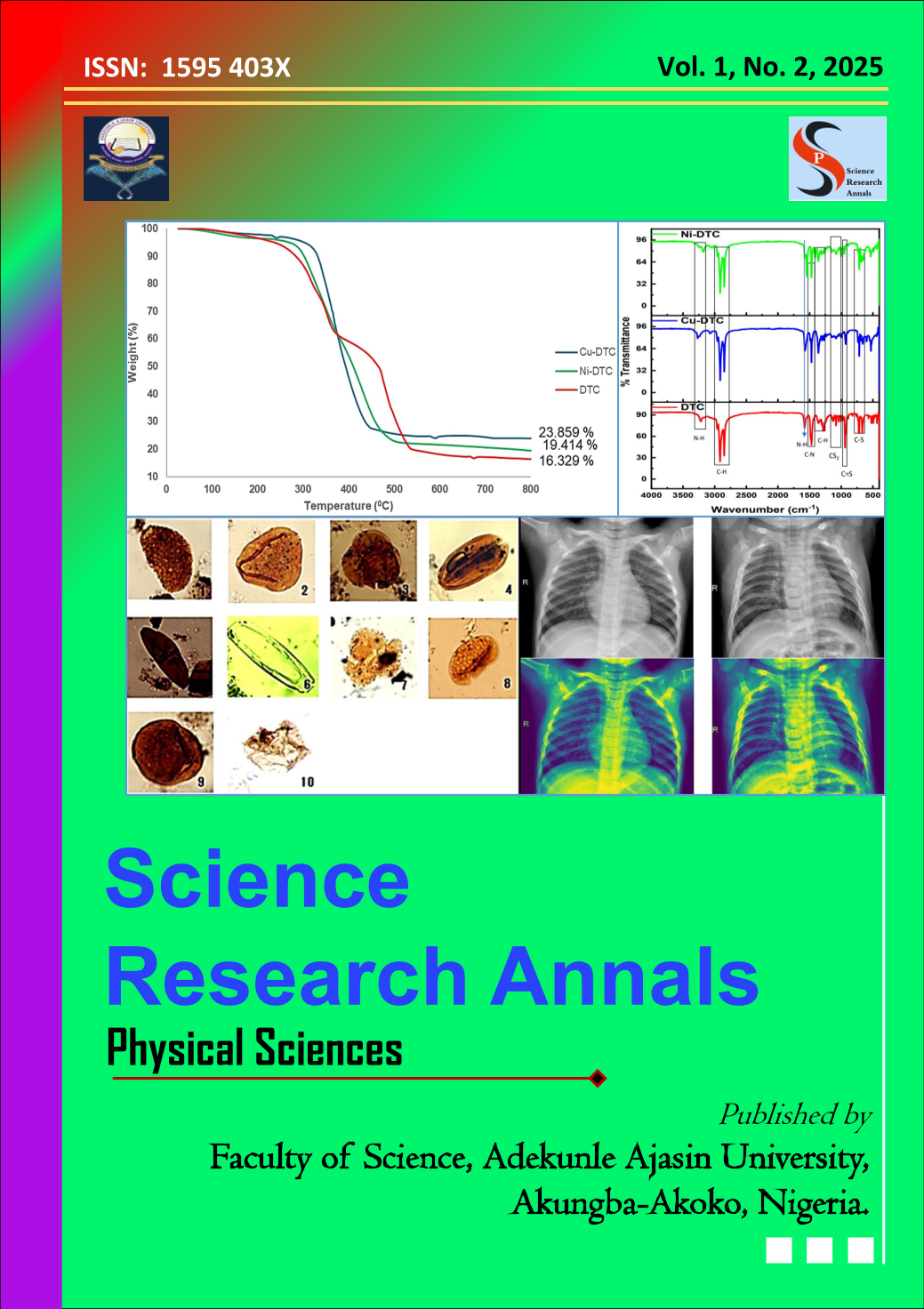
This work reports on the synthesis of Ni and Cu-dithiocarbamate complexes, prepared via in situ reduction of respective metal salts with long-chain hexadecylamine in the presence of NaBH4. The as-synthesized metal complexes were obtained in satisfactorily high yields and characterized using various techniques. FTIR results indicate that the bonds between metal ions and sulfur atoms in the complexes are bidentate. SEM images revealed the presence of relatively small, irregular, and spherical particles. EDX spectroscopy confirmed the elemental composition of C, S, Cu, and Ni, supporting the successful synthesis of the metal complexes. XRD analysis shows that the dithiocarbamate (DTC) and Ni complexes are crystalline, while the Cu complex is amorphous. Thermogravimetric analysis (TGA) indicates higher stability of the Cu complex compared to the Ni complex and the DTC ligand. Antimicrobial studies demonstrated significant antibacterial activity of the Ni complex against various pathogenic bacteria, surpassing the effectiveness of the DTC ligand and the Cu complex. These findings suggest potential applications for dithiocarbamate complexes as antimicrobial agents. This research enhances the understanding of the synthesis, characterization, and biological activity of dithiocarbamate complexes, offering insights into their potential applications in various fields such as pharmaceuticals (as antimicrobial agents), agriculture (as fungicides or pesticides), and materials science (as precursors for metal sulfide nanoparticles).
Downloads
Published
Issue
Section
License
Copyright (c) 2025 SRA - Physical Sciences

This work is licensed under a Creative Commons Attribution-NonCommercial-NoDerivatives 4.0 International License.