
Bio-efficacy of Allium sativum /Syzygium aromaticum Linn. Ethanol Extracts and Selected Toothpastes Against Recurrent Aphthous Stomatitis, RAS (Mouth Ulcer) Isolates.
DOI:
https://doi.org/10.63112/ff5mdb32Keywords:
Antimicrobial agents , Bacteria , Fungi, Inhibition zones , Mouth ulcerAbstract
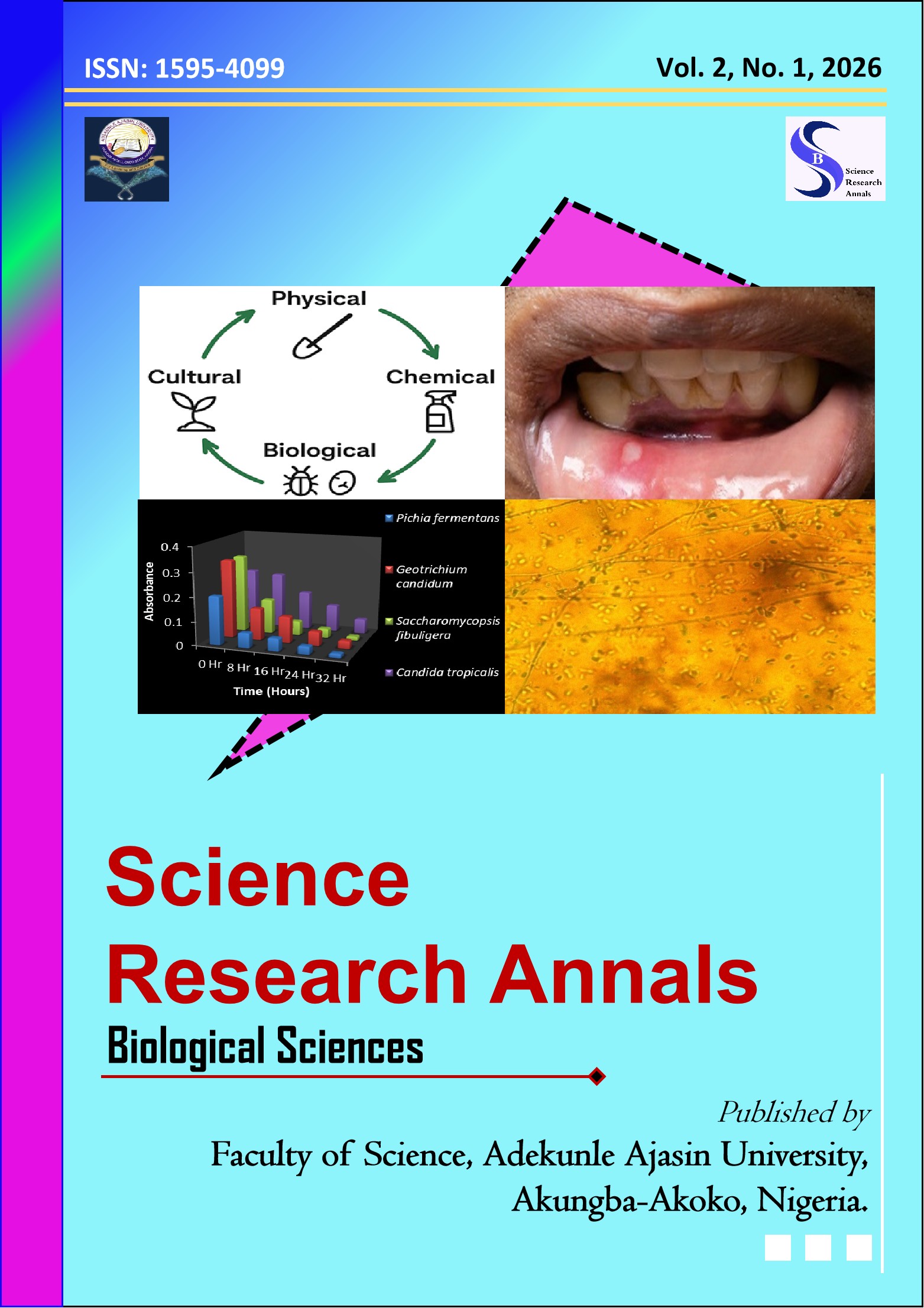
This study evaluated the bioefficacy of Allium sativum Linn. /Syzygium aromaticum Linn. extracts and selected toothpastes against Recurrent aphthous stomatitis, RAS (mouth ulcer) isolates. The rationale for this research topic is rooted in public health concerns. Mouth ulcers, such as recurrent aphthous stomatitis (RAS) and other mucosal lesions, possess a significant global health burden, impacting quality of life through pain, discomfort, and difficulties in eating or speaking. Mouth ulcers, often exacerbated by opportunistic pathogens, pose significant oral health challenges. Microbial analysis of mouth ulcer samples was carried out using standard microbiological techniques. A total of 10 bacterial and 4 fungal isolates were obtained from six mouth ulcer sources (MU 1- MU 6). Bacterial isolates, identified through their morphological and biochemical characteristics include; Corynebacterium matruchotii, Lactobacillus casei, Streptococcus salivarius, Enterobacter cloacae, Lactobacillus acidophilus, Lactobacillus reuteri, Klebsiella pneumoniae, Bacillus cereus, Lactobacillus brevis, Bacillus licheniformis, and fungal isolates include; Pichia fermentans, Geotrichium candidum, Saccharomycopsis fibuligera, and Candida tropicalis. Microbial loads were quantified via CFU/mL on Nutrient Agar and Potato Dextrose Agar respectively. Antimicrobial activity of these toothpastes and garlic/clove ethanol extracts was assessed using agar well diffusion, macro-broth dilution (MIC/MBC/MFC), and time-kill kinetics (OD620 at 50% concentrations over 32 hours). Bacterial counts averaged 1.4 x 10⁵ CFU/mL and fungal counts 1.7 x 10⁵ CFU/mL, showing a major microbial imbalance. Toothpaste, (e.g., Colgate) showed zones up to 37 mm and MICs of 3.125% against K. pneumoniae, while garlic achieved 31 mm and 0% MIC against S. salivarius. Clove exhibited 27 mm zones and 12.5-50% MICs. Time-kill assays revealed >90% reduction by 8-24 hours for garlic against most isolates, outperforming toothpastes (~70-75% kill by 24-32 hours). In conclusion, garlic and clove extracts rival or surpass commercial toothpastes in combating mouth ulcer pathogens, supporting their use as natural alternatives amid antimicrobial resistance.
Downloads
Published
Issue
Section
License
Copyright (c) 2026 SRA - Biological Sciences

This work is licensed under a Creative Commons Attribution-NoDerivatives 4.0 International License.